
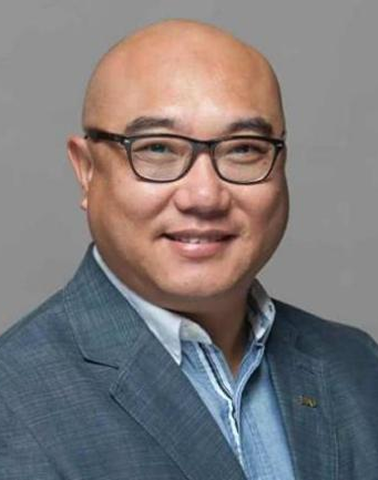
Professor Li Chenzhong currently serves as a Xueqin Chair Professor at The Chinese University of Hong Kong, Shenzhen (CUHK-Shenzhen). He also holds the position of Editor-in-Chief of the international flagship academic journal Biosensors and Bioelectronics (IF: 13), Associate Editor of RESEARCH (IF: 11) sponsored by the China Association for Science and Technology (CAST), and Editor-in-Chief of Technology and Innovation Journal (the official journal of the National Academy of Inventors, USA).
Professor Li obtained his Master’s and Doctoral degrees from Kumamoto University, Japan, where his research focused on the redox properties of synthetic metalloproteins. After completing his PhD in 2000, he pursued postdoctoral training at the University of British Columbia and the University of Saskatchewan, both in Canada. In 2003, he joined the National Research Council Canada (NRC) as a federal government researcher. Starting in 2006, he served at the College of Biomedical Engineering, Florida International University (USA), holding successive positions as Assistant Professor, Associate Professor (with tenure), and Full Professor. During this period, he founded and directed the Center for Nano-Bioengineering and Bioelectronics.
From 2017 to 2020, Professor Li was selected to work as a Program Director at the U.S. National Science Foundation (NSF) for three years. His responsibilities included formulating strategies for U.S. national research programs, assisting in the review and management of innovation and transformation seed funds for small and medium-sized enterprises (SMEs), and overseeing the management and approval of research grants and projects in the fields of biochips and sensors. He also collaborated with multiple U.S. federal agencies—including other disciplinary divisions within NSF, the U.S. Department of Defense (DoD), the Defense Advanced Research Projects Agency (DARPA), the U.S. Department of Agriculture (USDA), the U.S. Department of Health and Human Services (HHS), the U.S. Environmental Protection Agency (EPA), the National Aeronautics and Space Administration (NASA), and the National Institute of Standards and Technology (NIST)—to establish interdisciplinary and cross-ministerial comprehensive research projects.
In 2021, Professor Li became a Joint Professor in the Department of Biochemistry and the Department of Biomedical Engineering at Tulane University (USA). His current research focuses on the research and development of bio-optoelectronics and biosensor chips, with an emphasis on applied technology development—particularly in applications such as clinical disease diagnosis, in vitro diagnostics (IVD), smart healthcare, environmental protection, and food testing. In the field of disease treatment, his work concentrates on biophysical therapy, exploring the use of light, electricity, magnetism, music, and other modalities for the diagnosis and treatment of psychiatric disorders and degenerative diseases.
Professor Li has received numerous awards and honors, including the Kauffman Entrepreneurship Professor Award (2009, 2011), the Japan Society for the Promotion of Science (JSPS) Visiting Professor Award (2014), the Technology Development Pioneer Award from the Organization for Human Brain Mapping (OHBM, USA, 2016), the Minority-Serving Institutions (MSIs) Faculty Cancer Research Award (presented by the American Association for Cancer Research (AACR), 2016), and the IEEE Distinguished Lecturer Award (2019).
As of 2023, Professor Li has published nearly 190 SCI-indexed academic papers and is the lead inventor of 18 international patents. He has also founded three startup companies (in China, the USA, and Canada) and served as their Chief Technology Officer (CTO). Long-term, he has acted as a review expert for research projects funded by the U.S. NSF, the U.S. National Institutes of Health (NIH), China’s Ministry of Science and Technology (MOST), and the National Natural Science Foundation of China (NSFC). Additionally, he serves as a guideline review expert for the Shenzhen Municipal Science, Technology and Innovation Commission (SMSTIC) and a planning project review expert for the Shenzhen Municipal Public Works Bureau.